Discover Vikram-1: India’s Revolutionary Private Rocket 🚀🇮🇳


Vikram-1 orbital rocket by Skyroot Aerospace.
The Indian private space sector is witnessing a golden era, and at the forefront of this revolution is Skyroot Aerospace. Named after the visionary Dr. Vikram Sarabhai, the Vikram-1 rocket is an orbital launch vehicle designed to make satellite launches affordable, reliable, and frequent. 🌌
If you are a space enthusiast looking for real information on India’s most anticipated private rocket, you are in the right place. Let’s dive deep into what makes Vikram-1 a total game-changer for the global space industry! ✨
What is Vikram-1? 🛰️
Vikram-1 is a multi-stage orbital launch vehicle built by the Hyderabad-based startup, Skyroot Aerospace. Unlike heavy government rockets, Vikram-1 is specifically tailored for the booming small satellite market. It is designed to carry payloads of up to 480 kg to Low Earth Orbit (LEO) at an altitude of 500 kilometers.
This rocket is incredibly special because it represents India’s massive leap into commercial spaceflight, competing directly with global giants in the small satellite launch market.
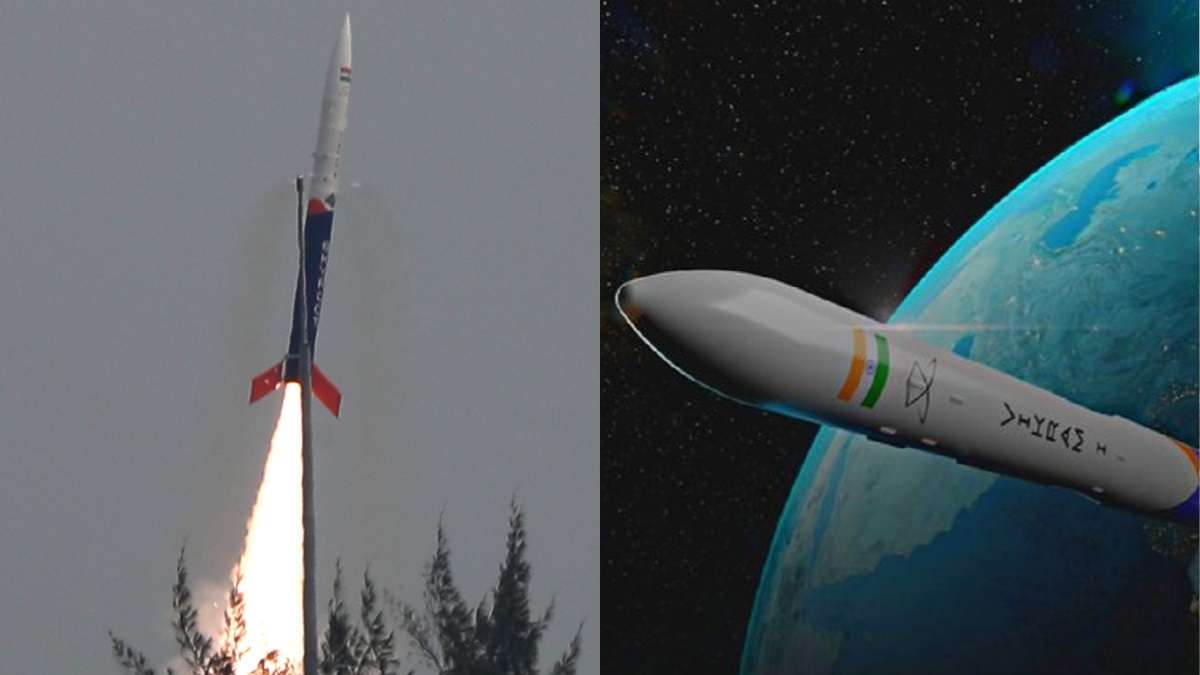
Skyroot Aerospace’s launch vehicle and mission preparation.
Key Features of Vikram-1 🛠️
The engineering behind Vikram-1 is both innovative and cost-effective. Here are its standout features:
- All-Carbon Composite Structure: To keep the rocket incredibly lightweight but strong, Vikram-1 uses an all-carbon composite body. This increases its payload capacity. 🪶
- Solid and Liquid Propulsion: It is a highly reliable four-stage rocket. The first three stages use solid propellants (which are safer and easier to store), while the fourth “kick stage” is liquid-fueled. 🔥
- The Raman Engine: The final liquid stage is powered by the Raman engine (named after C.V. Raman). It is uniquely designed with 3D-printed components and can restart multiple times in space to insert satellites into precise orbits! 🎯
- Quick Assembly: Vikram-1 is designed for rapid deployment. It can be assembled and launched within 24 to 72 hours from any launch site. ⏱️
Development and Launch Cost 💰
Breaking Down the Cost Paradigm
One of the biggest selling points of Vikram-1 is its low cost. While traditional space agencies spend upwards of $50 million to $100 million per launch, Skyroot Aerospace aims to drastically cut this down.
While the exact launch price per kg is kept competitive and dynamic, the overall development of the Vikram series has been backed by over $68 million in funding from massive global investors. By using 3D printing and carbon composites, Skyroot is aiming to offer launch services at a fraction of the cost of traditional global launch providers. This makes space accessible to startups, universities, and private companies. 🌍💵
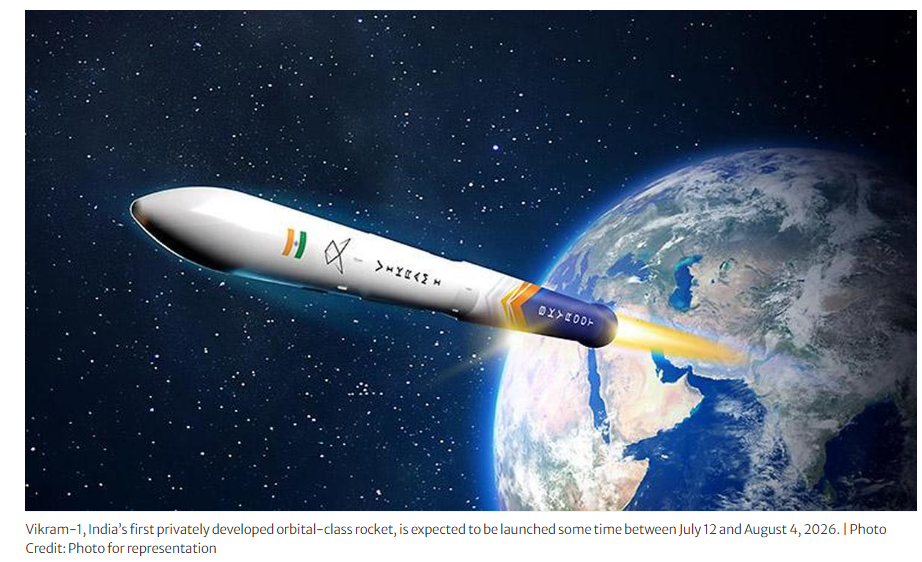
Inside Skyroot Aerospace’s tech development and mission journey.
Why is Vikram-1 a Game-Changer? 🏆
The success of the Vikram-1 orbital launch vehicle proves that India isn’t just reliant on ISRO for space dominance. With Skyroot Aerospace paving the way, the Indian space startup ecosystem is proving it can build world-class technology.
Whether it’s deploying internet-beaming satellites, earth observation tech, or scientific experiments, Vikram-1 is ready to be the reliable “space taxi” for the world! 🚖🌌
Are you excited about India’s private space future? Let us know in the comments below! Don’t forget to share this post with your fellow space nerds. 👇
✨ Thanks for tuning in to today’s ultimate tech edition! Stay curious! ✨
📝 This article was researched and written by Venkatesh A, Founder of verakworld.com.