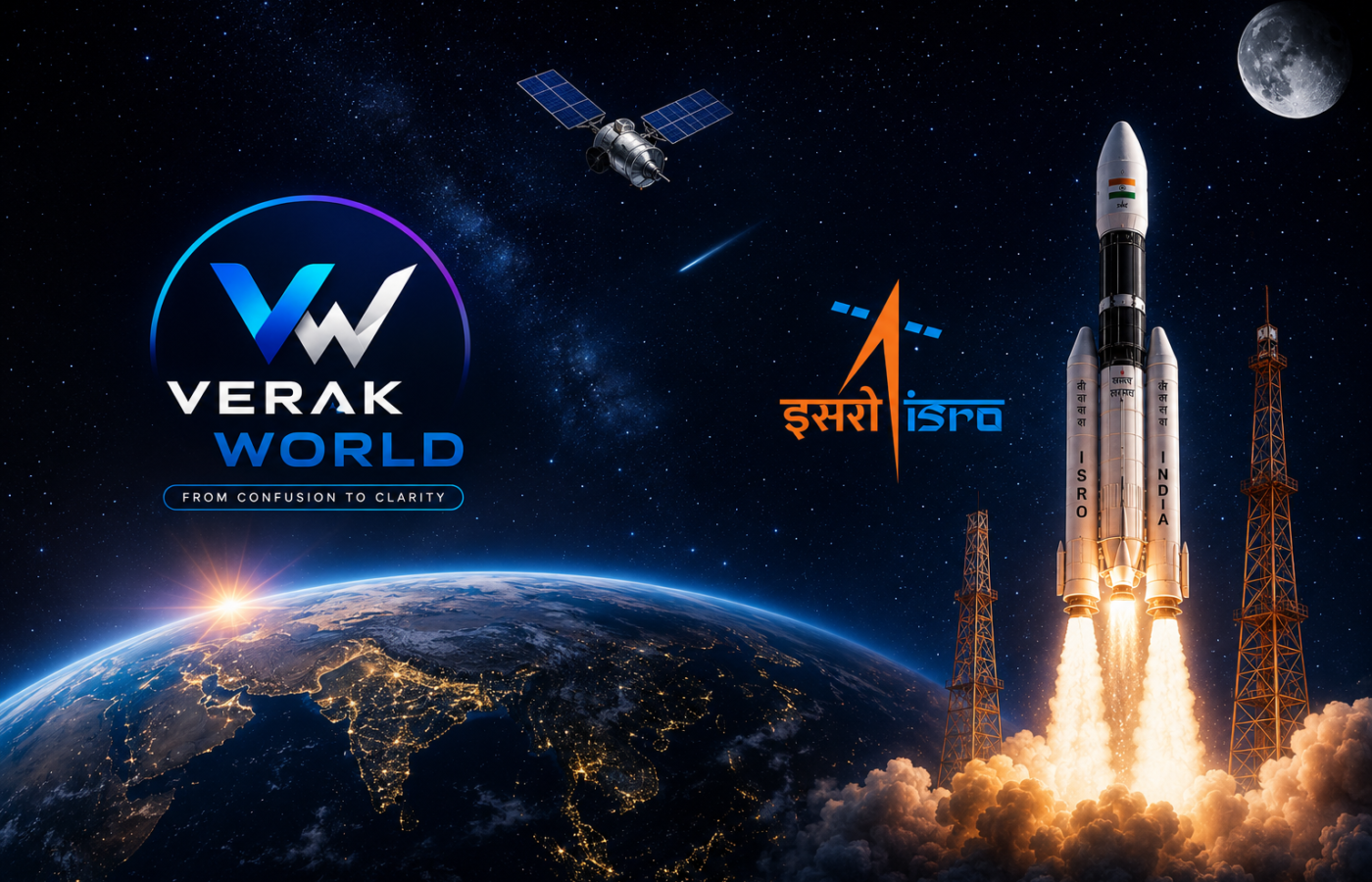
National Space Day 2026: India’s Space Journey, Chandrayaan-3, ISRO, Aditya-L1 & Future Missions

Celebrating India’s space achievements, Chandrayaan-3, ISRO, Aditya-L1, Gaganyaan and the country’s ambition to become a global space leader.
🇮🇳 Towards Viksit Bharat: Innovating, Collaborating and Aspiring to Global Space Leadership
🇮🇳 What Is National Space Day 2026?
India celebrates National Space Day every year on 23 August to remember one of the most important achievements in the country’s space journey. On 23 August 2023, the Chandrayaan-3 Vikram Lander successfully achieved a soft landing near the southern polar region of the Moon.
The historic achievement made India the fourth country to achieve a soft landing on the Moon and the first country to reach the lunar south polar region. The landing site was later named Shiv Shakti Point.
🎯 2026 Theme: “Towards Viksit Bharat: Innovating, Collaborating and Aspiring to Global Space Leadership.”

🚀 National Space Day 2026: Quick Facts
🌌 Why Is National Space Day Important?
National Space Day is more than a celebration of one successful mission. It represents decades of scientific research, engineering, teamwork, innovation and national investment in space technology.
India’s space programme has gradually expanded from satellite development and launch vehicles to lunar exploration, solar observation, human spaceflight, navigation, Earth observation and commercial space activities.
🔬 Science & Innovation
Space missions encourage research in physics, astronomy, electronics, robotics, materials science, computer science and many other fields.
🎓 Inspiration for Students
National Space Day encourages young people to explore STEM education and imagine careers in science, engineering, robotics and space technology.
🌍 Space Applications
Satellites support communication, navigation, weather forecasting, Earth observation, agriculture, disaster management and many other applications.
🇮🇳 India’s Global Ambition
India is developing an increasingly capable space ecosystem involving government institutions, research organisations, startups, industry and international partnerships.
🌕 Chandrayaan-3: The Mission That Made History
Chandrayaan-3 was India’s third lunar exploration mission. It was designed to demonstrate the ability to perform a safe and soft landing on the Moon, operate a rover on the lunar surface and conduct scientific experiments.
The mission consisted of the Vikram Lander, Pragyan Rover and Propulsion Module. It was launched aboard the LVM3-M4 launch vehicle from the Satish Dhawan Space Centre at Sriharikota on 14 July 2023.
🛰️ Main Objectives of Chandrayaan-3
- Demonstrate a safe and soft landing on the Moon.
- Demonstrate rover movement on the lunar surface.
- Conduct scientific experiments on the Moon.
- Develop technologies required for future interplanetary missions.
🤖 Pragyan Rover
After landing, the Pragyan Rover was deployed from the Vikram Lander. The rover carried scientific instruments designed to study the lunar environment and determine the elemental composition around the landing region.
According to ISRO, the rover covered approximately 101 metres after landing while the mission payloads collected in-situ scientific data.
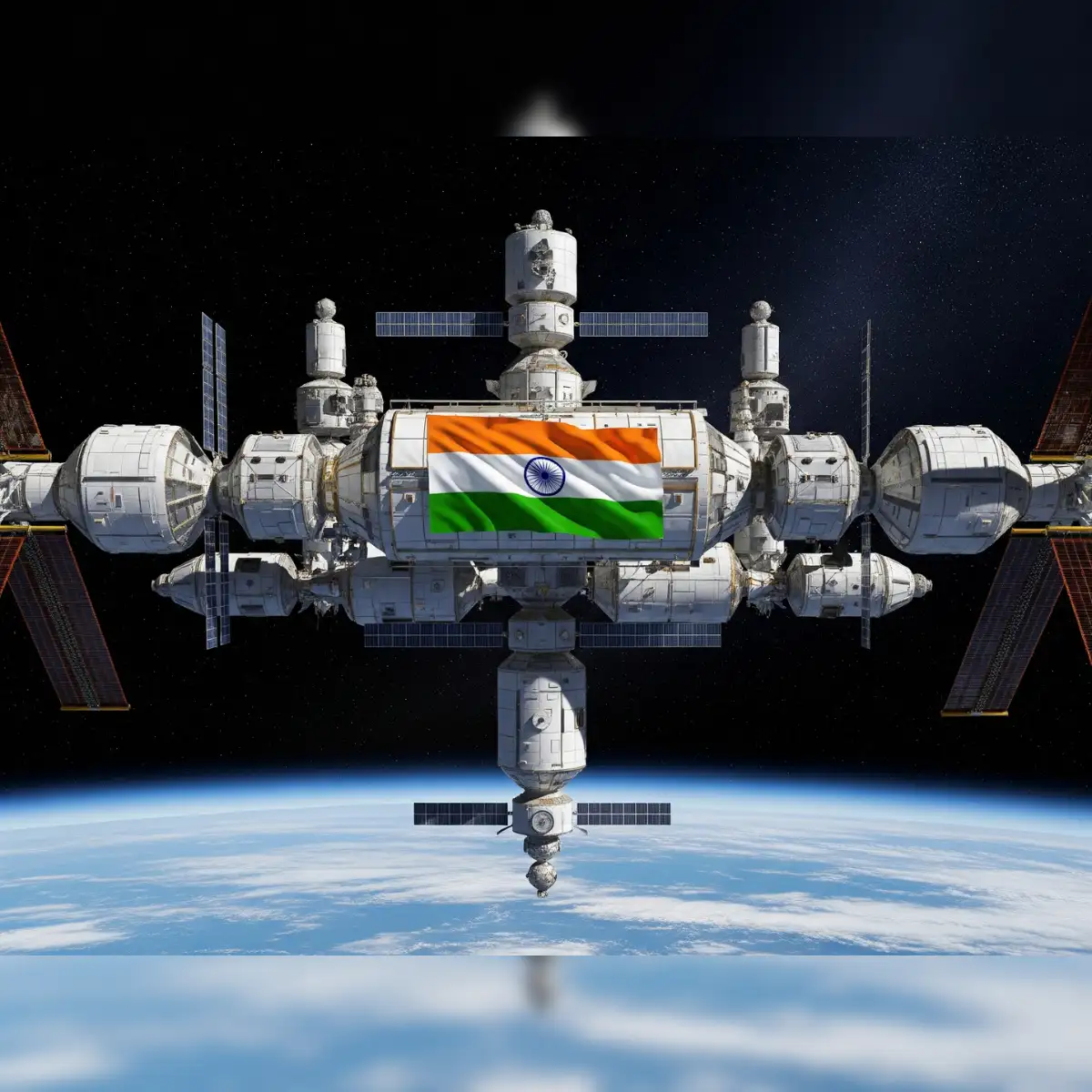
⏳ Chandrayaan-3 Mission Timeline
LVM3-M4 successfully launched Chandrayaan-3 from Sriharikota.
The spacecraft performed a series of Earth-bound and lunar-bound manoeuvres.
Vikram Lander successfully soft-landed near the Moon’s southern polar region.
Pragyan Rover was deployed and scientific experiments were conducted on the lunar surface.
Images of the Vikram Lander were captured by the Pragyan Rover.
☀️ Aditya-L1: India’s Mission to Study the Sun
India’s space programme is not limited to the Moon. The Aditya-L1 mission is India’s first space-based mission dedicated to the comprehensive study of the Sun.
Aditya-L1 is positioned around the Sun-Earth L1 Lagrange point, allowing scientists to continuously observe the Sun and study solar activity.
The spacecraft carries seven scientific payloads. These instruments are designed to investigate different aspects of the solar atmosphere and space weather.

🚀 India’s Space Journey: From Aryabhata to Modern Missions
India’s space journey has evolved dramatically over several decades. From developing early satellites and launch capabilities, India has progressed towards sophisticated planetary missions and human spaceflight.
| Mission / Milestone | Importance |
|---|---|
| Aryabhata | India’s first satellite, marking an important beginning in India’s satellite programme. |
| Chandrayaan-1 | India’s first lunar mission and an important step in lunar science. |
| Mars Orbiter Mission | Demonstrated India’s capability in interplanetary mission operations. |
| Chandrayaan-2 | Expanded India’s lunar exploration capabilities. |
| Chandrayaan-3 | Achieved a historic soft landing near the lunar south polar region. |
| Aditya-L1 | India’s dedicated mission for studying the Sun. |
| Gaganyaan | India’s human spaceflight programme. |
👨🚀 Gaganyaan: India’s Human Spaceflight Ambition
One of India’s major future space goals is human spaceflight through the Gaganyaan Programme.
The programme is intended to develop India’s capability for human space missions and requires advanced systems covering crew safety, launch vehicles, spacecraft, life-support systems, mission control and recovery.
Gaganyaan represents an important transition from robotic exploration towards human spaceflight.
🔭 What Is Next for India’s Space Programme?
India’s future space programme is expected to expand across several areas including human spaceflight, lunar exploration, planetary science, Earth observation, satellite navigation, space science and commercial space activities.
🌕 Future Lunar Exploration
India’s Chandrayaan programme continues to build experience for increasingly ambitious lunar missions.
👨🚀 Human Spaceflight
Gaganyaan is a major step towards India’s independent human spaceflight capability.
🛰️ Space Technology
Advanced satellites, launch vehicles, navigation systems and space-based services will remain important.
🤝 Private Space Sector
Startups and private companies are becoming increasingly important parts of India’s growing space ecosystem.
🇮🇳 National Space Day 2026 Theme
“Towards Viksit Bharat: Innovating, Collaborating and Aspiring to Global Space Leadership”
The theme highlights three major ideas: innovation, collaboration and global leadership. It reflects India’s ambition to strengthen its space capabilities while building partnerships across government, academia, industry and the wider space ecosystem.
🎓 Why National Space Day Matters to Students
Space exploration is not only for astronauts. Modern space missions require people from many scientific and technical fields.
- 🔬 Physics and Astronomy
- 💻 Computer Science and Artificial Intelligence
- 🤖 Robotics and Automation
- ⚙️ Mechanical and Aerospace Engineering
- 🔌 Electronics and Communication
- 📊 Data Science and Scientific Computing
- 🧪 Materials Science
- 🌍 Earth and Planetary Science
The biggest lesson from India’s space journey is that curiosity, patience, teamwork and scientific thinking can transform ambitious ideas into real achievements.
✨ National Space Day 2026 Message
“The sky is not the limit — it is the beginning of a journey.”
National Space Day reminds us that scientific progress begins with curiosity. India’s journey from early satellite missions to Chandrayaan-3, Aditya-L1 and future human spaceflight demonstrates the power of knowledge, innovation and teamwork.
❓ Frequently Asked Questions
When is National Space Day 2026 celebrated?
National Space Day 2026 is celebrated in India on 23 August 2026.
Why is National Space Day celebrated on 23 August?
23 August commemorates the successful soft landing of Chandrayaan-3’s Vikram Lander on the Moon in 2023.
What is the theme of National Space Day 2026?
The 2026 theme is “Towards Viksit Bharat: Innovating, Collaborating and Aspiring to Global Space Leadership.”
What was India’s achievement with Chandrayaan-3?
Chandrayaan-3 successfully achieved a soft landing near the Moon’s southern polar region, making India the fourth country to soft-land on the Moon and the first to reach the lunar south polar region.
What is Aditya-L1?
Aditya-L1 is India’s first space-based mission dedicated to studying the Sun.
What is Gaganyaan?
Gaganyaan is India’s human spaceflight programme, designed to develop capabilities for human space missions.
Who conducts India’s major space missions?
India’s major space missions are led by the Indian Space Research Organisation (ISRO) under the Department of Space, Government of India.
🚀 Happy National Space Day 2026!
From Aryabhata to Chandrayaan, from the Moon to the Sun, and from today’s achievements to tomorrow’s possibilities — India’s space journey continues.
🇮🇳 Dream Big. Learn Science. Explore Space. 🚀
VerakWorld — From Confusion to Clarity.
📝 This article was researched and written by Venkatesh A, Founder of verakworld.com.